کارگاه دو روزه کاربرد تحریک مغناطیسی فراجمجمهای (TMS) در مداخلات نوین روانپزشکی با تمرکز بر پروتکلهای درمانی – دستورالعملهای بالینی و بررسی موردی مداخلات مؤثر با TMS
دسترسی سریع
زمان
- ۱۵ - ۱۶ مرداد ۱۴۰۴
- منقضی شده است!
- 08:00 - 18:00
مکان
آزمایشگاه ملی نقشه برداری مغز
وضعیت ثبتنام
اتمام مهلت ثبتنام
دبیر علمی
دکتر حامد اختیاری
مدیر برنامه ریزی و تدوین محتوای آموزشی
مسئول اجرا
تیم ترویج و آموزش
سطح دوره
پیشرفته
دستاوردهای دوره
توضیحات در مورد دستاوردهای دوره…
اهداف دوره/رویداد
اهداف دوره….
توضیحات دیگر
کد رویداد
workshop-140427
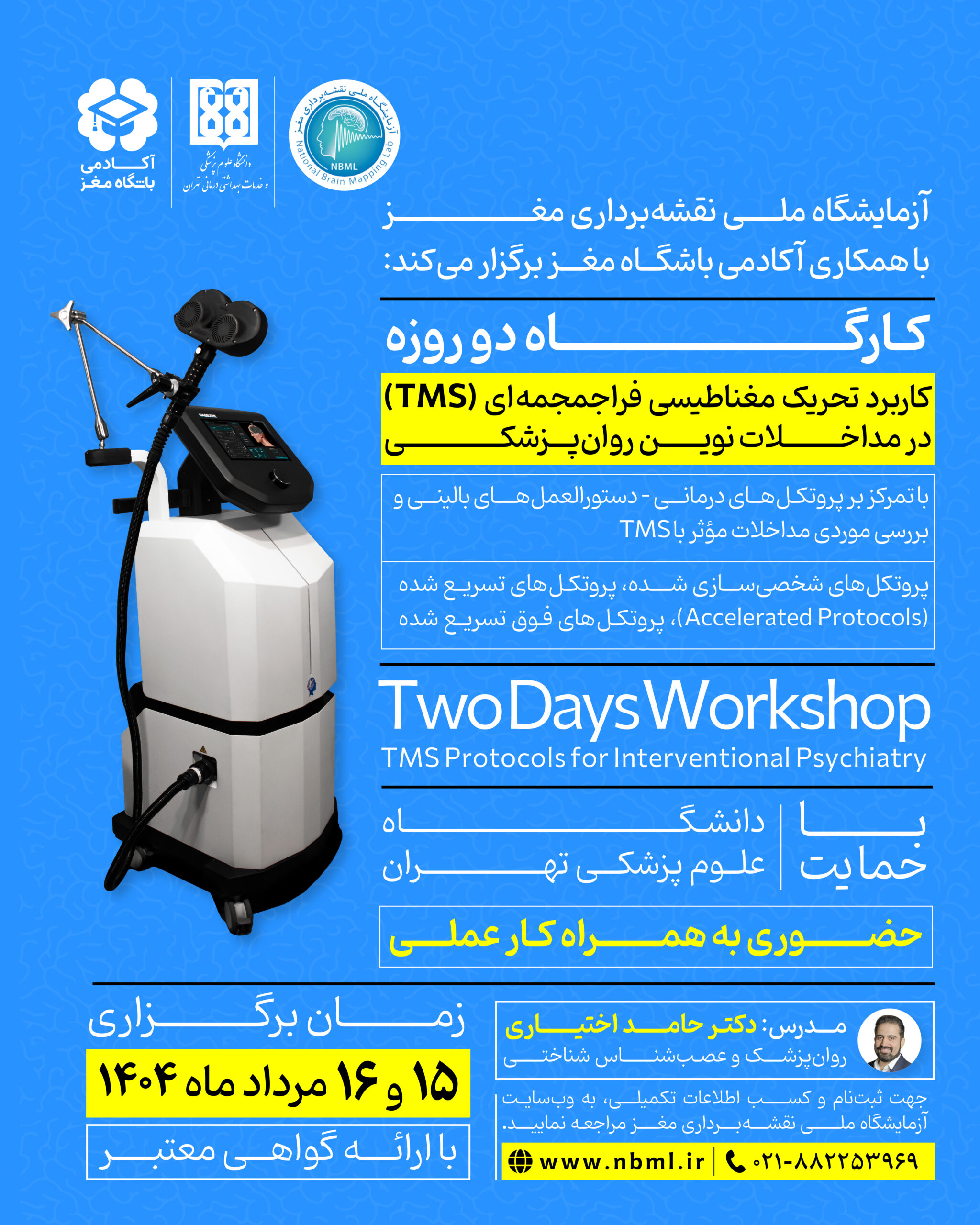
آزمایشگاه ملی نقشهبرداری مغز با همکاری آکادمی باشگاه مغز برگزارمیکند:
کارگاه دو روزه کاربرد تحریک مغناطیسی فراجمجمهای (TMS) در مداخلات نوین روانپزشکی
با تمرکز بر پروتکلهای درمانی – دستورالعملهای بالینی و بررسی موردی مداخلات مؤثر با TMS
پروتکل های شخصی سازی شده، پروتکل های تسریع شده (Accelerated Protocols)، پروتکل های فوق تسریع شده
حضوری به همراه کار عملی
با حمایت:
دانشگاه علوم پزشکی تهران
مدرس:
دکتر حامد اختیاری؛ روانپزشک و عصبشناس شناختی
زمان برگزاری: ۱۵ -۱۶ مرداد ماه ۱۴۰۴
ساعت ۸ صبح لغایت ۱۴
Workshop
TMS Protocols for Interventional Psychiatry
Two Days, With Emphasis on Circuit-based Therapeutics, Guidelines and Clinical Case Discussions
Instructor: Hamed Ekhtiari, MD, PhD, Psychiatrist and Neuroscientist
Co-Organizers: Departments of Psychiatry of Tehran University of Medical Sciences
Audience: Group 1: Psychiatrists and Residents of Psychiatry
Group 2: TMS Team Members: Physicians, Psychologists and Neuroscientists
Time and Venue: 15-۱۶ August 2025 (Wednesday and Thursday)
at Iranian National Brain Mapping Laboratory
Day One: 8-9:30 (Group 1 and 2)
- Introduction and Basics of Brain Stimulation
- Motivation and Justification
- Brain Stimulation Technologies
- My Personal History with TMS Since 2007
- Brief History and Regulations of TMS Worldwide
- TMS Physical Principles
- Neurobiological Mechanisms of TMS
- TMS Parameters
- Pulse Shapes
- Pulse Strength
- Coil Orientation
- Coil Shape
- Stimulation Timing
- Paired Pulse TMS and Its Potential Diagnostic Value
- TMS Machines and How to Decide Between Them
Day One: 10-11:30 (Group 1 and 2)
- Decision for a TMS Protocol: A Personalized Protocol
- Target Optimization
- Dose Adjustment of Stimulation
- Effect of State Dependency on TMS Response
- Timing of Stimulation
- Bridging the Gap Between Theory and Practice in the Clinic
- ۱۰-۱۰ and 10-20 EEG Systems: Standardization in Target Area Determination
- Beam-F3 Measurement System
- Methods for Determining Motor Threshold
- Types of Motor Threshold
- Key Steps for Determining “HotSpot”
- Adaptive Methods for Finding Motor Threshold
- Practical Tips for Using Pulse Strength in the Clinic
- Side Effects and Safety of TMS
- Practical Tips for Using TMS in the Clinic: A Comprehensive Guide for Therapists
Day One: 12-13 (Group 1): Panel: Current Clinical TMS Practices and Case Scenarios in TUMS and IUMS: Potentials and Challenges Fatemeh Sadat Mirfazeli, MD (IUMS), Saba Faraji, MD (TUMS), Sahar Ansari, MD (TUMS),
Day One: 12-13 (Group 2)
- Practical Station 1 (Beam-F3 Method)
- Practical Station 2 (Using Beam Software)
- Practical Station 3 (Finding C3 Area)
Day One: 13-14 (Group 1)
- Practical Station 1 (Beam-F3 Method)
- Practical Station 2 (Using Beam Software)
- Practical Station 3 (Finding C3 Area)
Day Two: 8-9:30
- Neural Circuit Mapping in Designing Treatment Protocols
- Introduction and Review of Day 1
- Decoding the Brain: Neural Circuits and Their Role in TMS
- Revolution in Depression Treatment with TMS: History and Importance
- TMS Protocols in Depression
- TMS Protocols in Depression – First Generation (rTMS)
- TMS Protocols in Depression – Second Generation (Theta burst)
- TMS Protocols in Depression – Third Generation (Accelerated protocols)
- SAINT and AINT Protocols
- Updated TMS Selection Algorithms for TRD
- TMS Personalization: New Horizons in Depression Treatment
- TMS Protocol in Anxious Depression
- TMS in OCD
- TMS in OCD: History and Importance
- Targeting Biomarker in OCD: Finding the Exact Target in the Brain for OCD Treatment
- FDA-Approved Protocol for Treating OCD using TMS
- CE-Approved Protocol for Treating OCD using TMS
Day Two: 11-12:30
- TMS in Addiction
- Transcranial Electrical and Magnetic Stimulation in Addiction: History and Importance
- Targeting Biomarker in Addiction: The Golden Key for Personalizing Addiction Treatment using TMS
- Personalized Targeting of the Frontopolar Area: A Precise Method for Treating Addiction using TMS
- Network Target Model: A Novel Approach to Brain Stimulation in Addiction Treatment
- FDA and CE Approvals: A Guarantee of Safety and Efficacy of TMS in Addiction Treatment
- INTAM Network: Global Collaboration for Advancing Brain Stimulation in Addiction Treatment
- TMS in Catatonia
- TMS in Bipolar Disorder: Mood Stabilization using TMS
- Target Biomarker in Catatonia
- Catatonia and TMS: Restoring Connection to Reality
- Other Potentially Clinically Relevant rTMS Protocols
- Pharmacotherapy and Transcranial Magnetic Stimulation
- Pharmacotherapy and TMS – Psychostimulants
- Pharmacotherapy and TMS – Benzodiazepines
- Pharmacotherapy and TMS – Nicotine/Opioids
- Pharmacotherapy and TMS – Other Medication
- Importance of State Dependency on TMS Response
- Safety Guidelines in Transcranial Magnetic Stimulation
- Personalization of TMS with fMRI: Future of Neurostimulation
- Emerging Horizons in TMS: A Revolution in Mental Health Treatments
Day Two: 12-13 (Group 1): Panel: Complex Case Scenarios, Quality Control Standards and Road Ahead: Seyed Vahid Shariat, MD (IUMS), Hamid Reza Naghavi, MD (TUMS), Mohammadreza Shalbafan, MD (IUMS), Mohammad Ali Oghabian, PhD (TUMS), Reza Khosrowabadi, PhD (SBU), OTHERS?
Day Two: 12-13 (Group 2)
- Practical Station 1 (Motor Threshold Assessment Tool)
- Practical Station 2 (Adaptive PEST is a free tool for TMS researchers and practitioners)
- Practical Station 3 (Neuronavigation and Circuit-based Therapeutics)
Day Two: 13-14 (Group 1)
- Practical Station 1 (Motor Threshold Assessment Tool)
- Practical Station 2 (Adaptive PEST is a free tool for TMS researchers and practitioners)
- Practical Station 3 (Neuronavigation and Circuit-based Therapeutics)
This workshop is designed to cover FDA approved/cleared and CE approved protocols with main emphasis in psychiatry. We will also discuss some off-label use based on the most updated pieces of evidence.
برای دیدن این رویداد روی موبایل خودتان این کد را اسکن کنید